
Treatment of Preparatory Drawings for Murals at Maryland House
by William Arthur Smith
(June 2022)
On April 2, 1968, a nine-panel, oil on canvas mural by William Arthur Smith (1918-1989) was installed in Maryland House (a rest stop along I-95), where it remained until 2002.
In connection with the murals, Mr. Smith prepared a variety of preparatory drawings, including gouache (an opaque watercolor) on a variety of sizes of paper, including some that were cut apart and taped together as Smith worked out the final compositions.
The resulting works were Smith’s plans for the murals. These documents had been housed in storage, however, in less than ideal conditions (some had been found in a plastic trash bag).
This series is a collection of gouache, watercolor, graphite pencil and other media, various size and paper types, bound or unbound, some collaged together or cut apart. Many have pencil lines of grid imposed to assist in transfer up to the size of the intended mural.
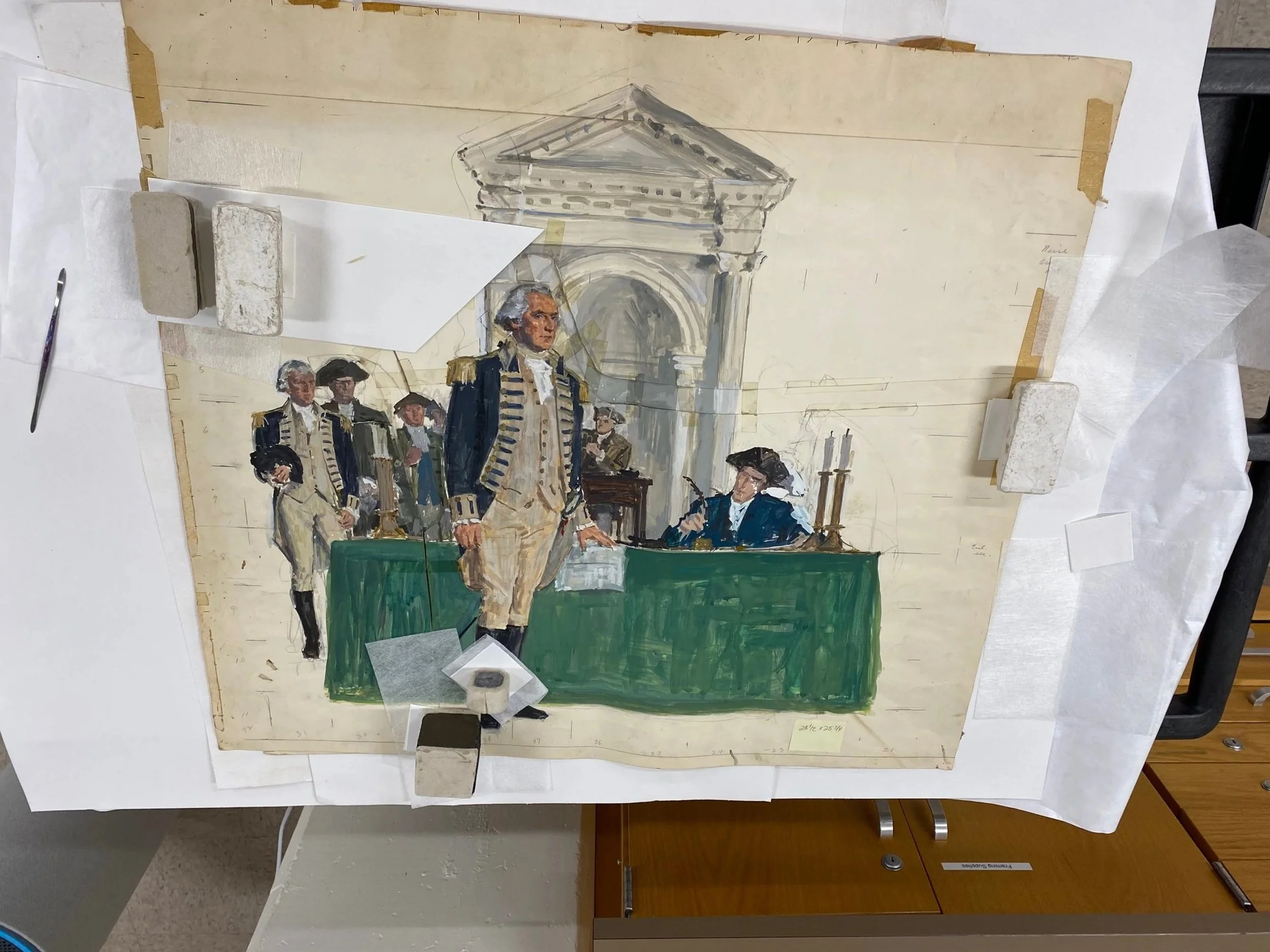
This was a grouping of artworks in the compositional planning stages, which the artist used to finalize his ideas and transfer that vision in his painting and installation of the murals. The resulting artworks would greet travelers at a rest stop in Maryland for many years. These artworks potentially acted as ambassadors of Maryland for the travelers passing through, missing other Maryland experiences.
The prolonged improper storage in a plastic bag inflicted some damage, but the damage was not as extreme as possible. The larger paper objects of this grouping suffered from some folding and curling, which required gentle flattening. The failure of the tape holding Smith’s compositions intact would have occurred eventually regardless of how the collection was housed.
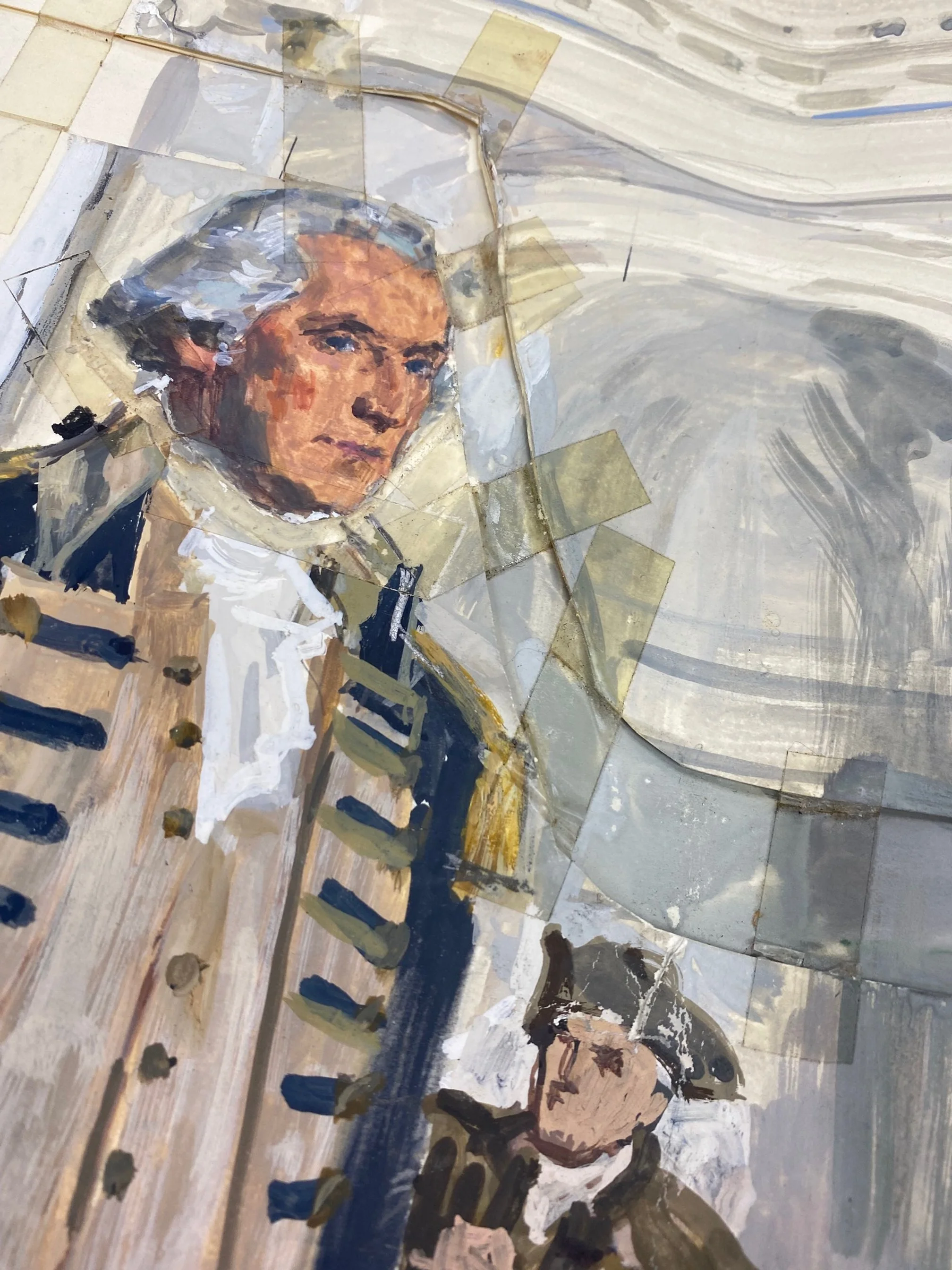
Yellowing cellophane tape was used at some point to join or repair the interior of the picture, as seen to the right of George Washington. Note the yellowing of Washington’ s ascot and the sharp edge immediately behind his head, suggesting even his head position may represent another completely cut paper section. Also note the abrasion on the hat worn by the figure behind and to the right of Washington.
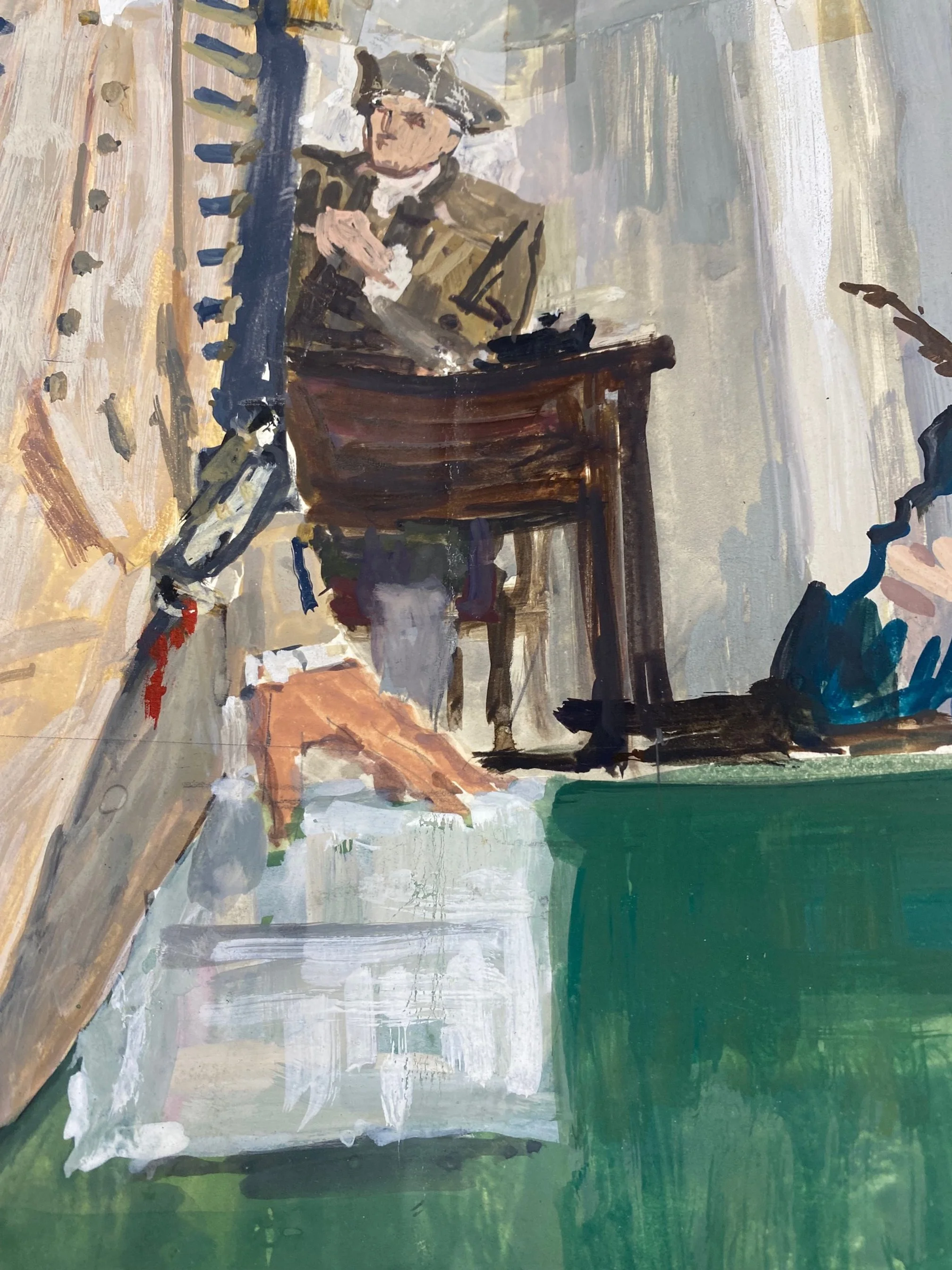
Detail showing the artist's painting technique. Note the fragility of Smith's heavy application of paint in the document under Washington's hand and the tricorn hat of the patriot sitting at the table in background.
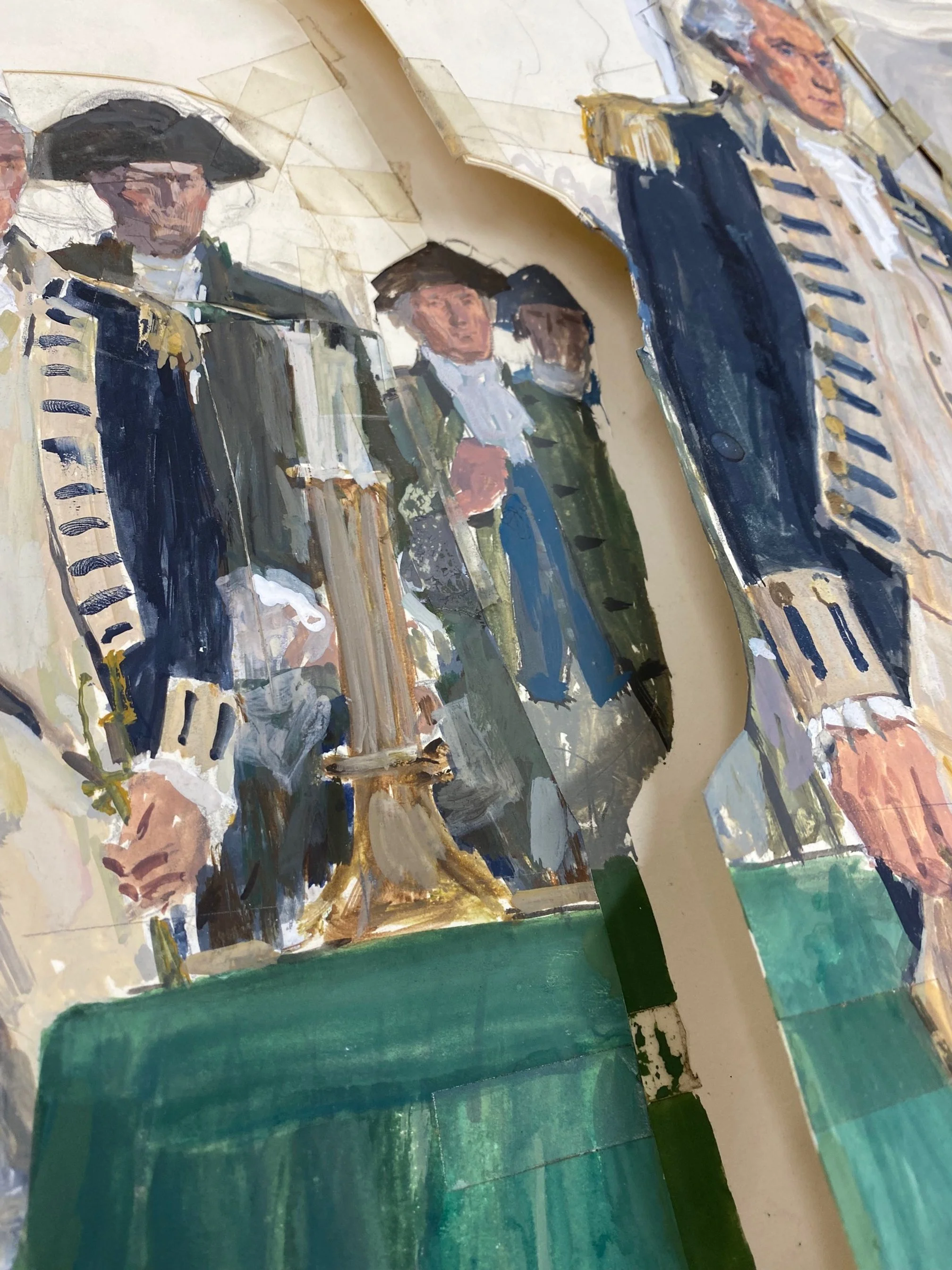
From this side detail, one can see the abrasive damage from the various surface elevations with sharply cut edges, including pressure-sensitive adhesive creep. The direct contact of similarly executed works, layered above and below, apparently exacerbated the condition.
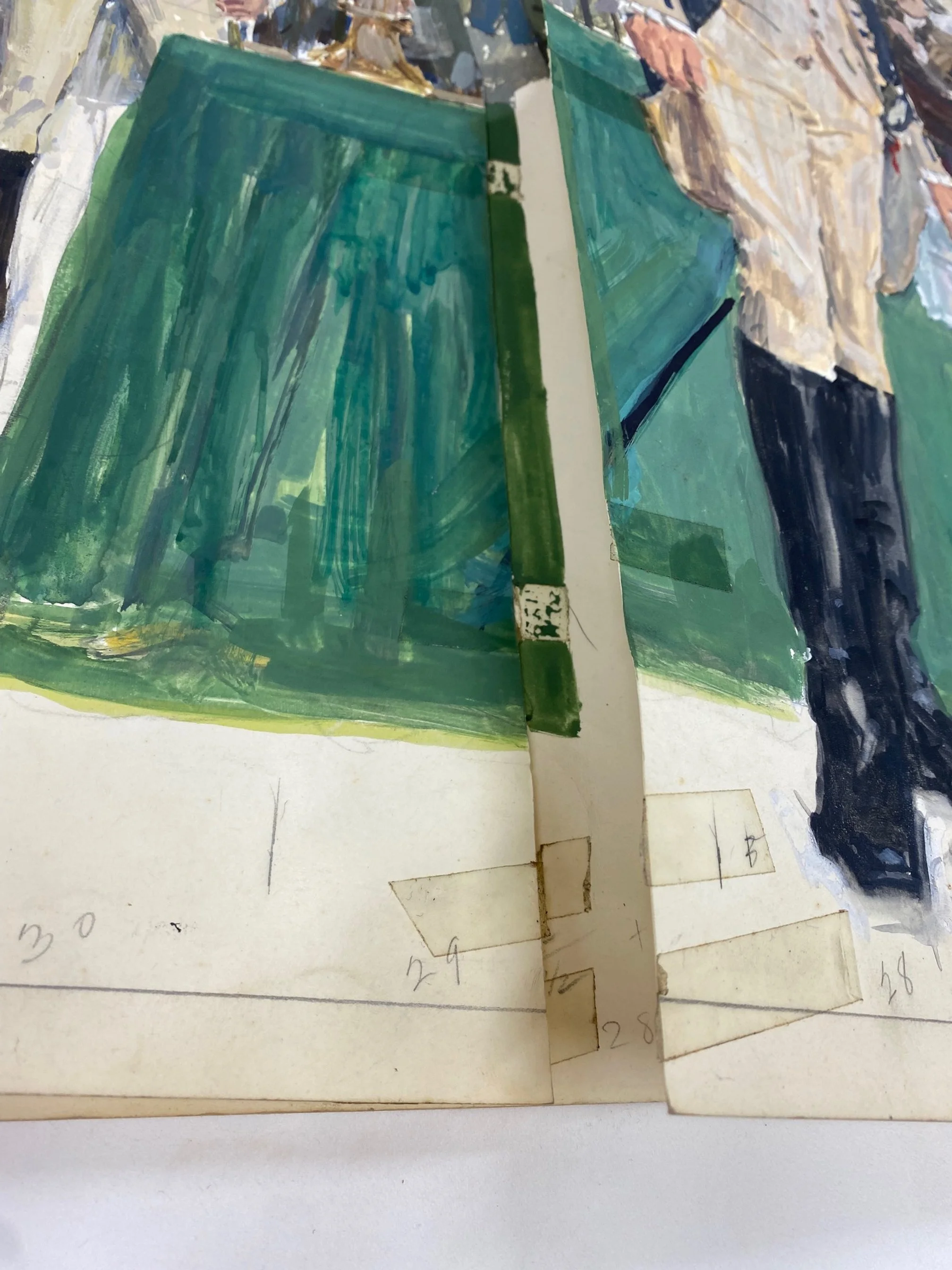
Additional indications of failure of the cellophane tape Smith used to assemble this preparatory drawing. Note the inch numbering along the edge, and corresponding numbers from replaced sections revealed in the layer below. One should sense from this image how fragile this work would be when lifted unsupported, exacerbated by additional weight due to two, and, in places, three, layers of Bristol board across most of this work.
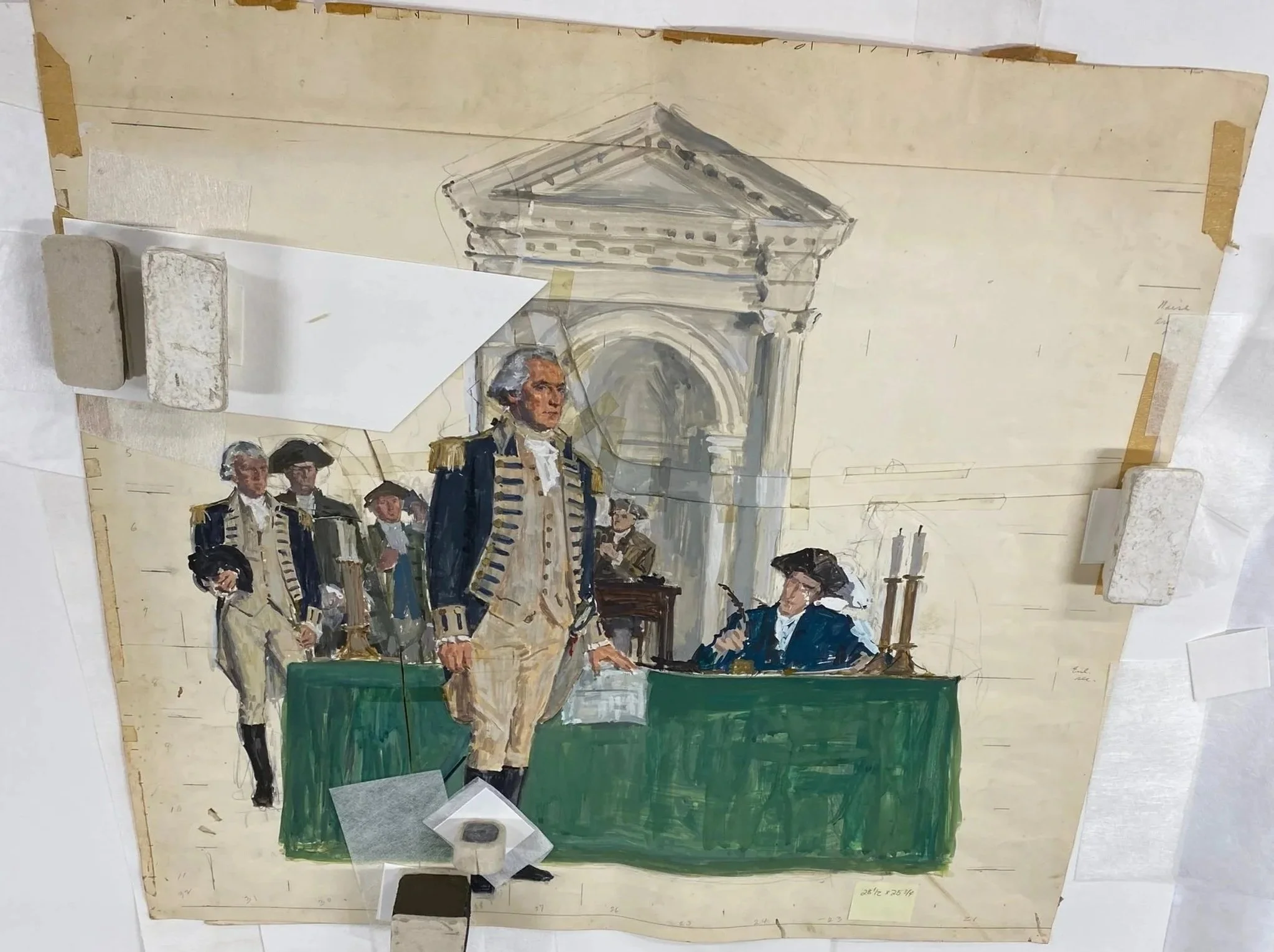
This image was taken during the process of stabilizing this work for storage. Kozo tissue was made into loops and adhered in multiple places between layers. These connections are not only reversible, but the loop shapes were also placed to facilitate reversal of the Kozo tissue connections, were it to be deemed necessary.