
Cecil County Ledger, Circa 1754
(Summer 2023)
This was a county court docket book in very poor repair. It was brought to my attention due to a need to locate a vital record within.
The binding was breaking, many pages broken at the sewing and into sections between half a page to a mere sliver in size. A surprising volume of fragments lay trapped within the cover, most with writing. The frailty of paper was such that the very act of turning pages risked the volume’s progression toward an irregularly disbound state.
It was observed that about every 10 pages there was indexing, written with minimal space, just larger than typewritten text. As each page was separated from its neighbor to prevent more loss, index pages were read for any mention of the surname the patron sought. Bond paper interleaving was added where the indexing was found, to reduce handling, should more information be required.
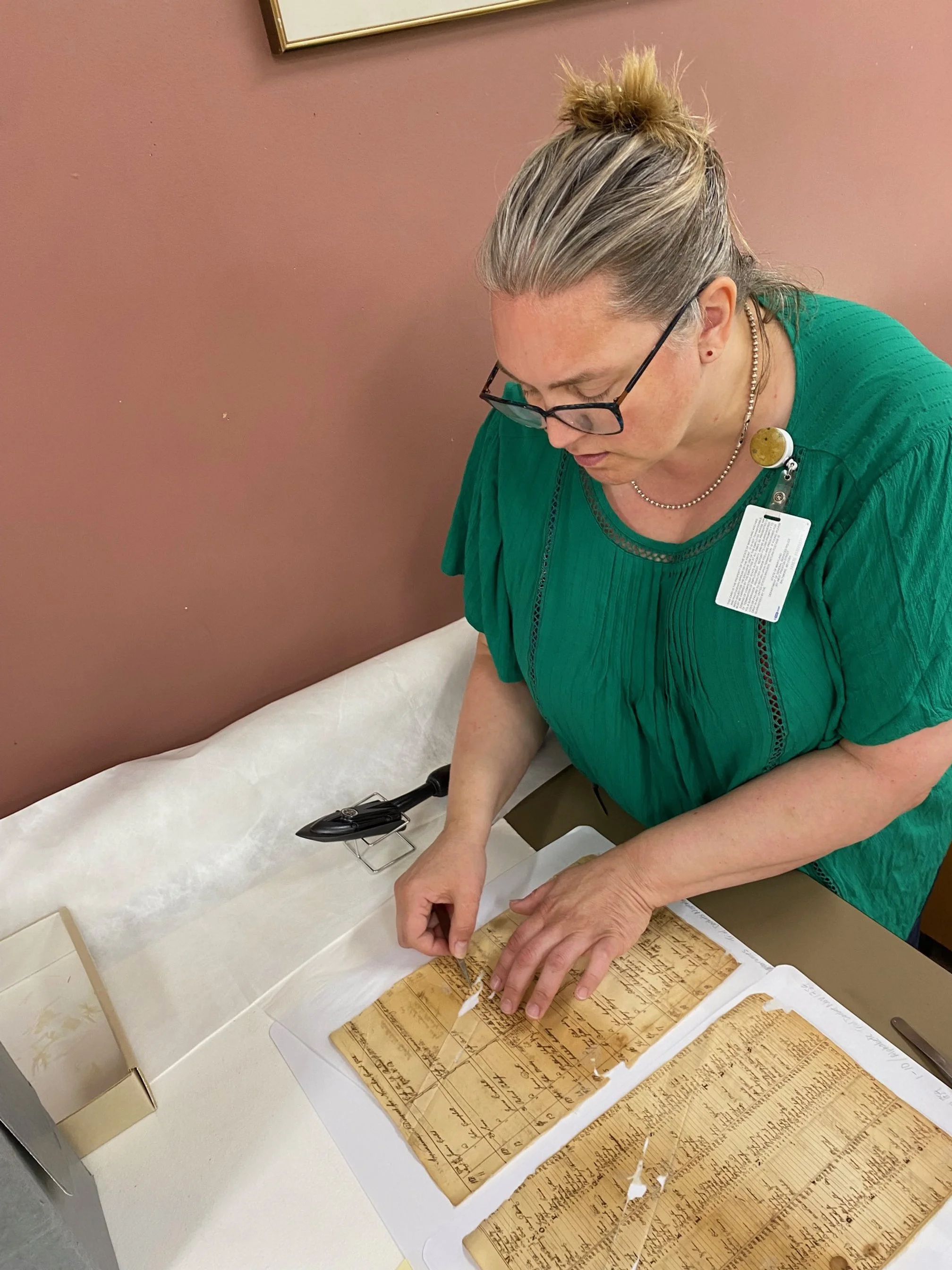
In under an hour, the patron was provided the required starting point to judge the relevance of each court case mentioning the surname.
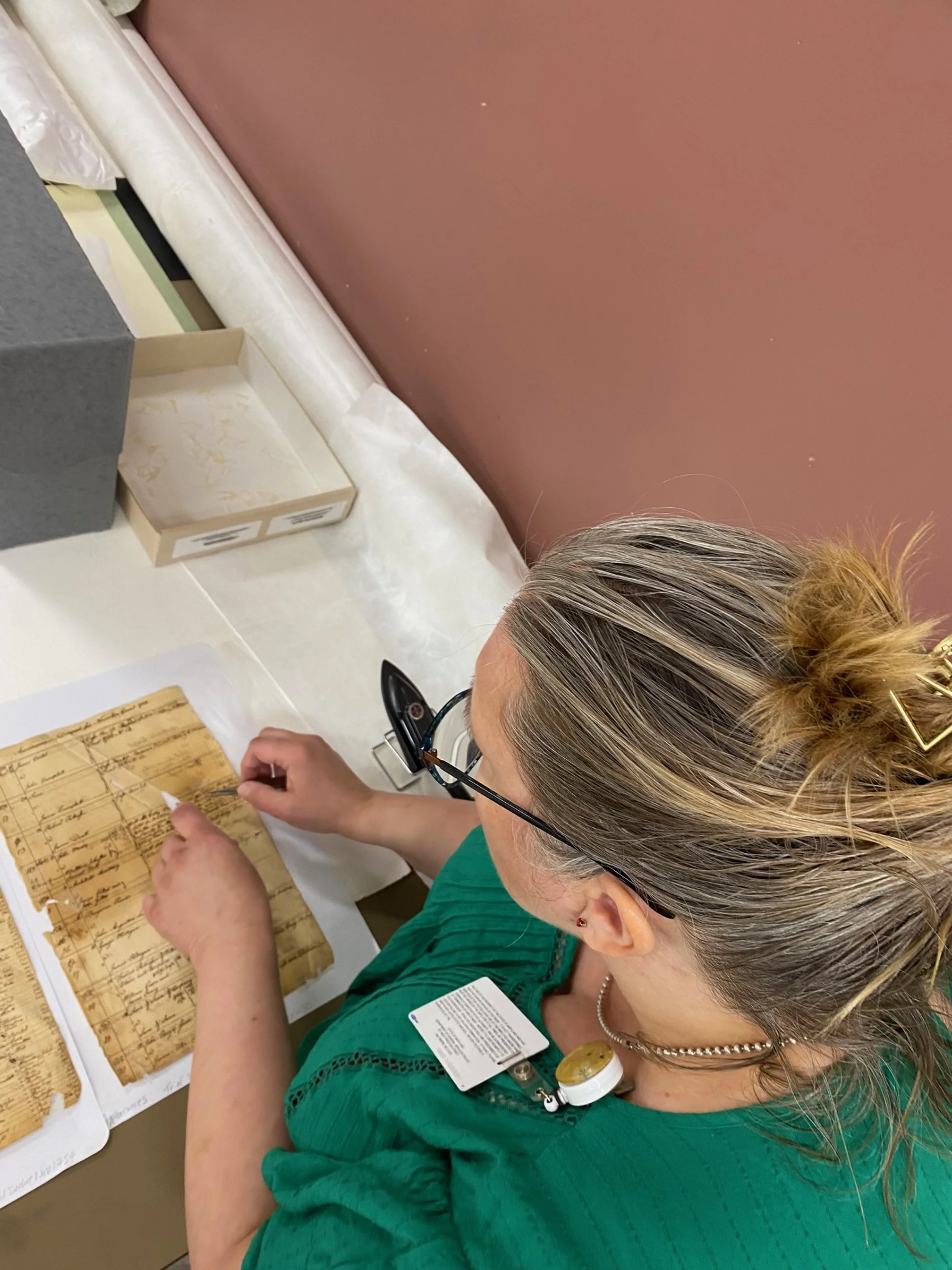
Left on the table was a book, not worse for this perusal, but so broken that intervention would be required just to pick it up and put it away. Thoughtful consideration was made, weighing the potential loss of information, the time that would be necessary to scan it, and the complete unsuitability of the volume for imaging in its current state.
What followed was a truly extensive treatment when compared to the expected and allotted energy put into most ledger books…
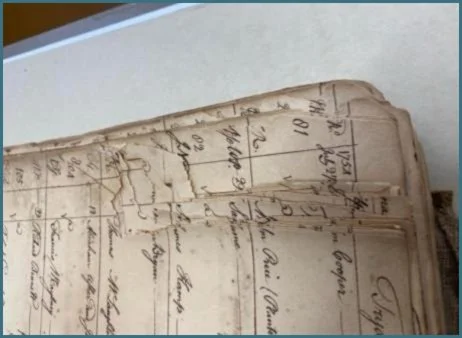
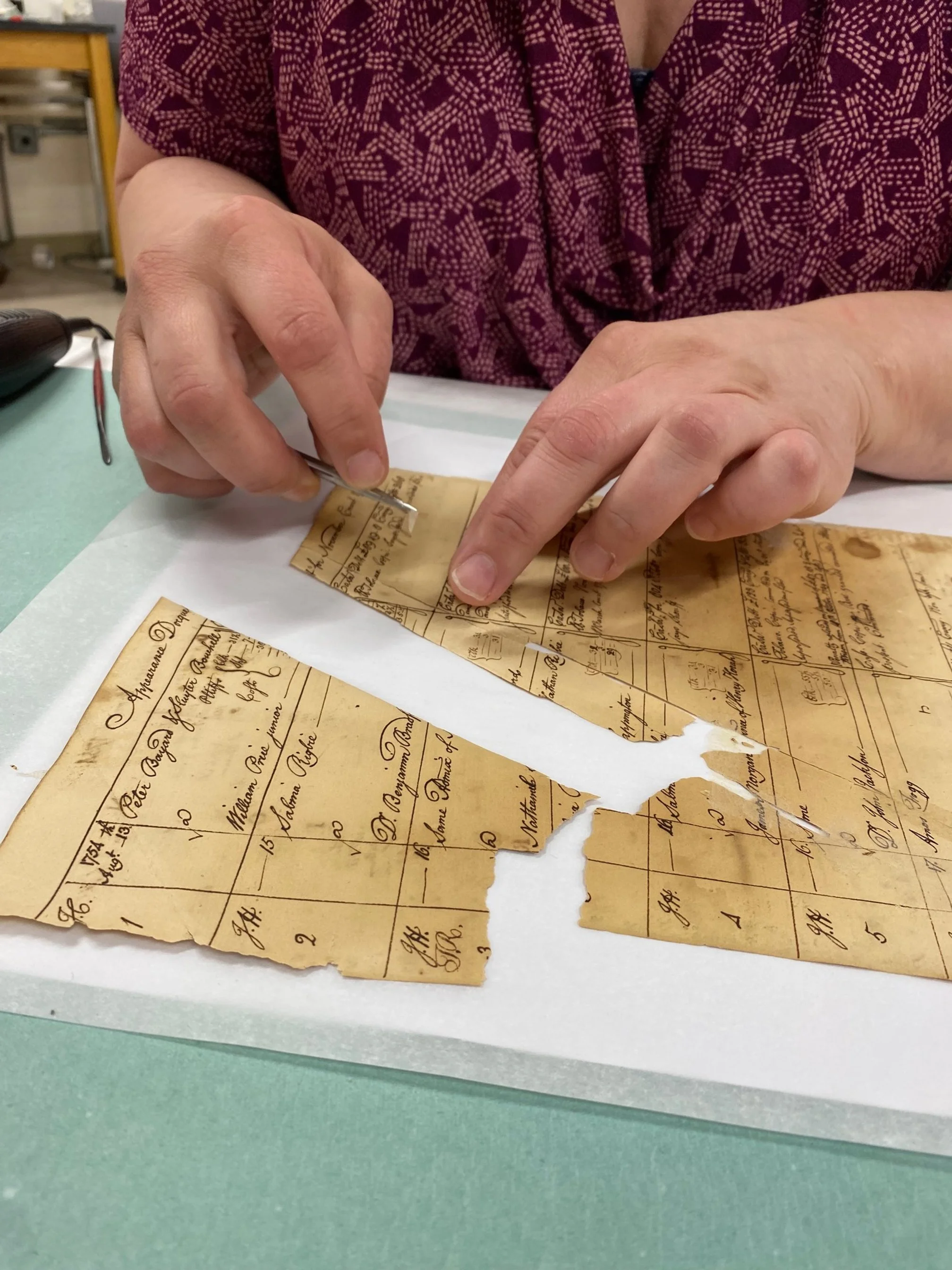
The document showed successive breakage along the Iron Gall ink lines. Not pictured are the carefully set aside groups of like-shaped fragments, still in order when nested.
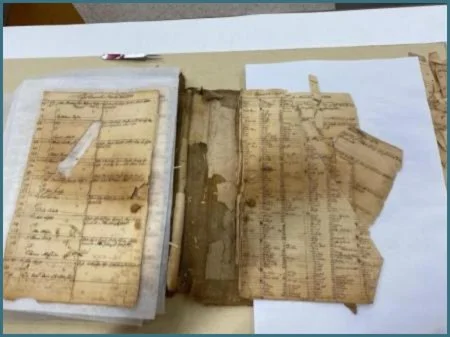
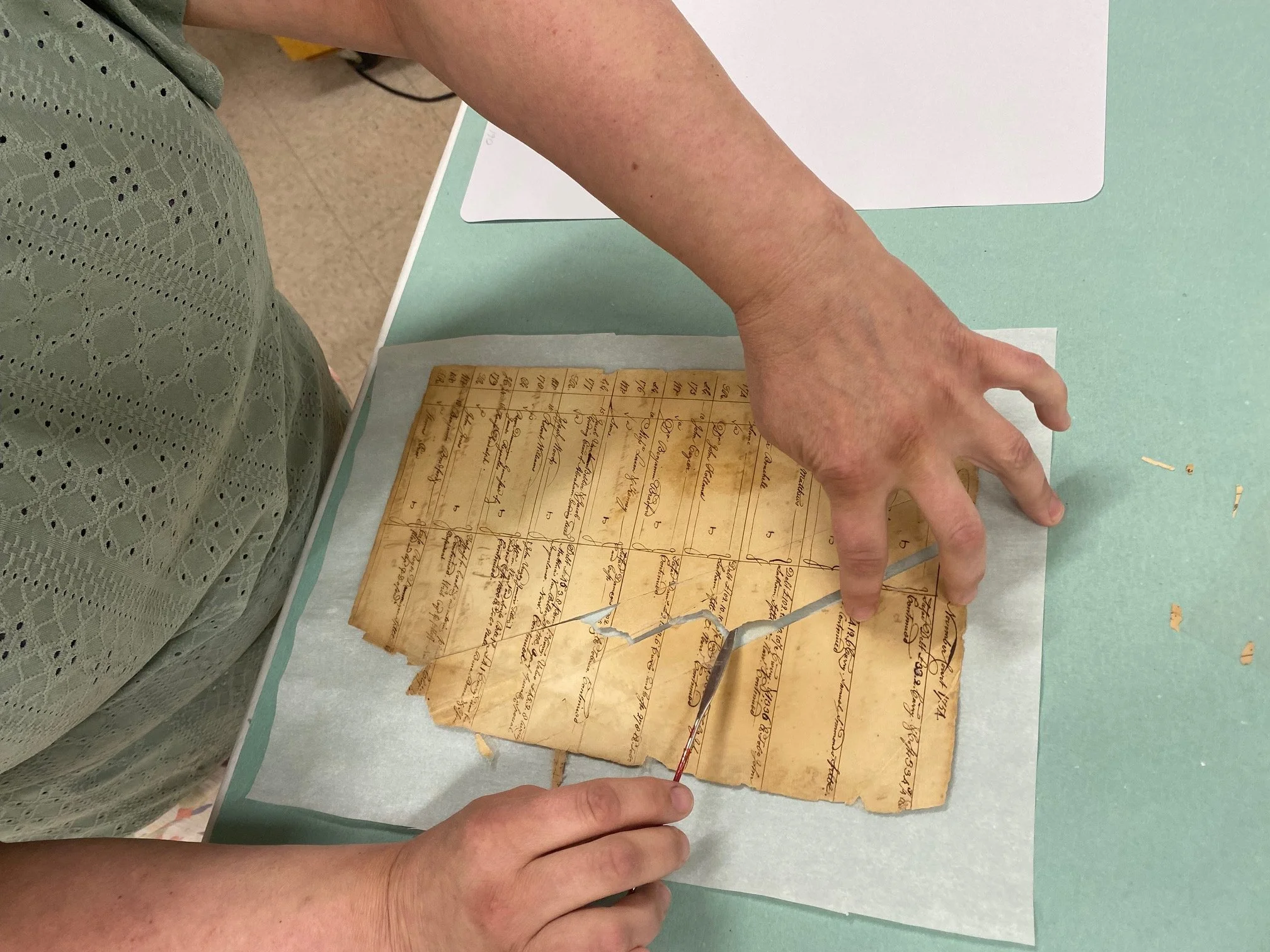
Separating the page layers, which were stuck folded and broken together. The most damaged sections seemed to be at the front and back of the book. I decided to proceed with the rest of the book, in order.
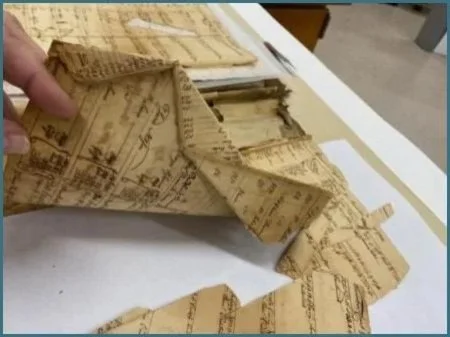
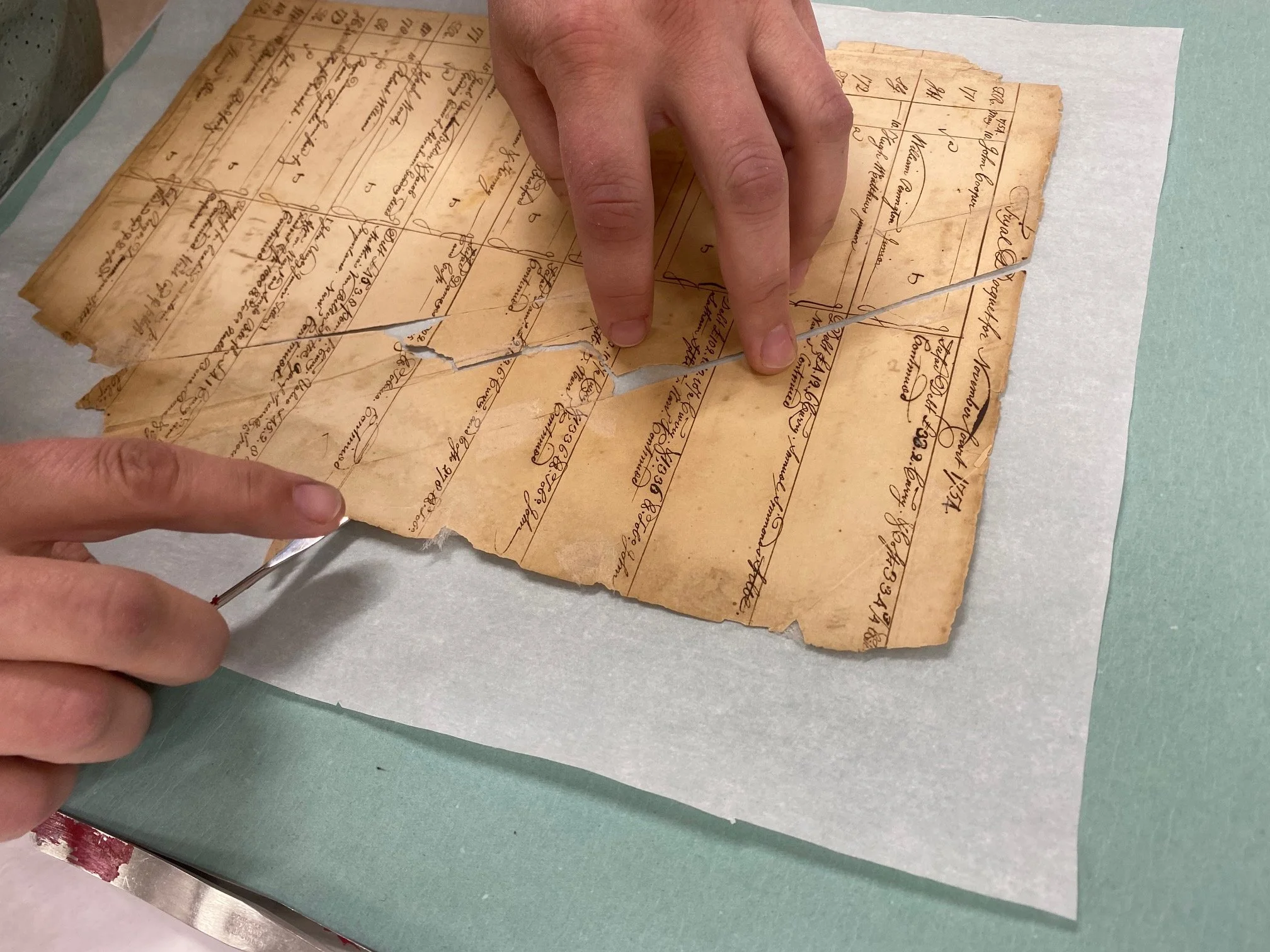
Another view of pages stuck together, grabbing and breaking.
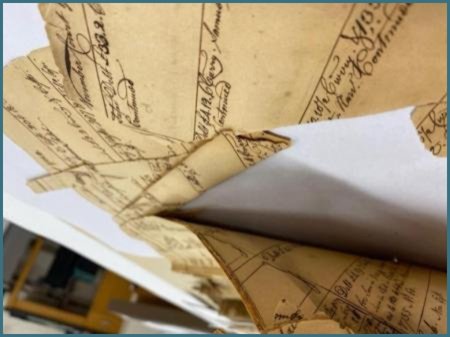
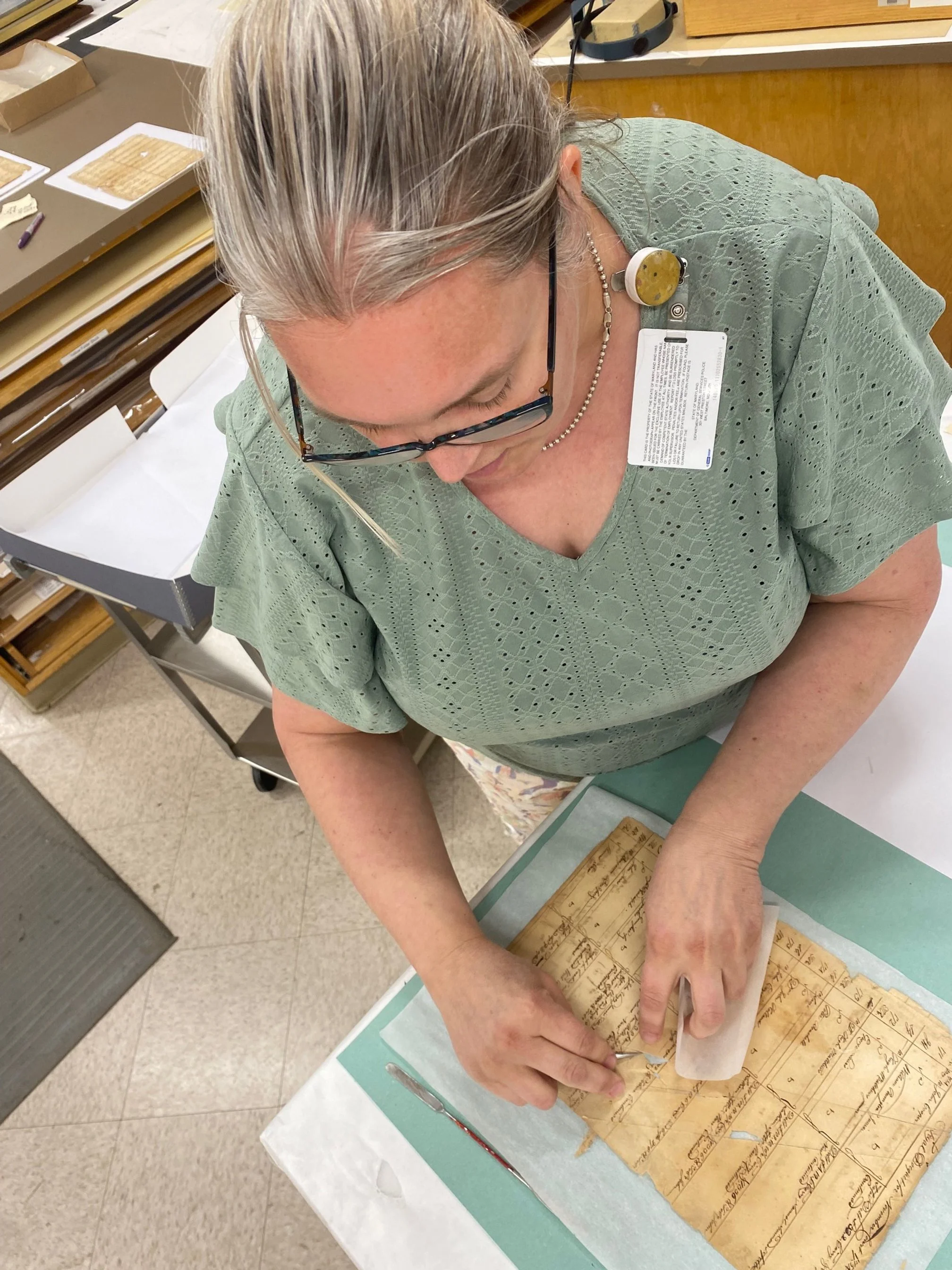
Third close-up of stuck and breaking pages.
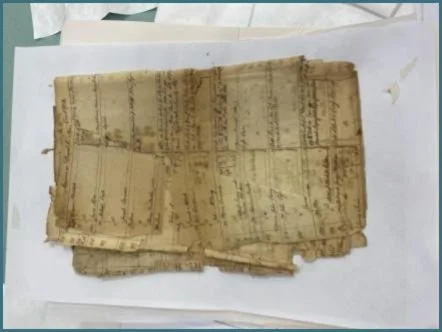
I adopted interleaving as a working strategy. Sometimes bond paper was further used in sections of broken and folded-over sheets like these. Keeping track of where fragments were found was also helped by the interleaving.
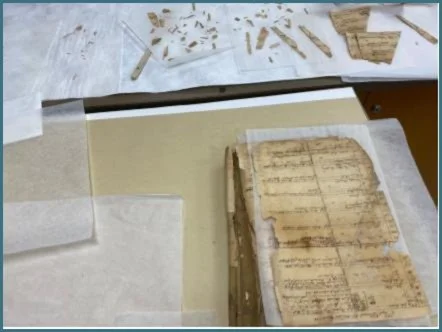
Some of the fragments discovered and set aside while turning pages through the document.
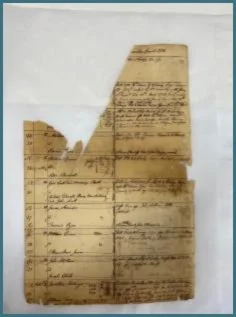
This shows the extent of water damage to the Iron Gall ink.
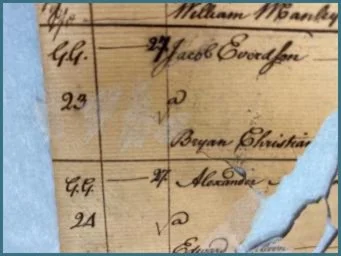
Small mends secure the page from further tearing. The lines between cases are helpful for alignment, though expansion and contraction of broken and folded paper sometimes make return to the exact original alignment impossible.
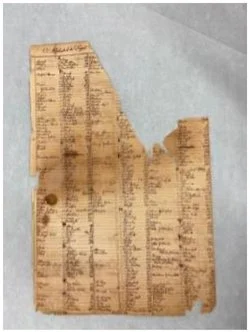
Even small losses at the bottom right corner and gutter represent significant losses of information on this densely written page. The large loss of the top right corner contained dozens of entries that hold the key to navigating the search for specific court case documents.
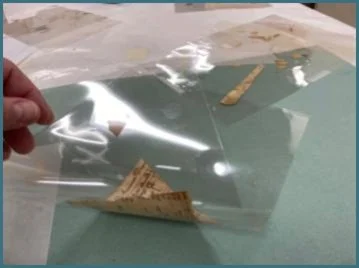
Shards of pages placed in Mylar sleeves to facilitate placement later in the treatment. Moving nested groups of like-shaped fragments into Mylar sleeves was possible, using care to keep the order of the pile within the sleeve. To the extent possible, I kept all such context clues available, which saved more time than it took.
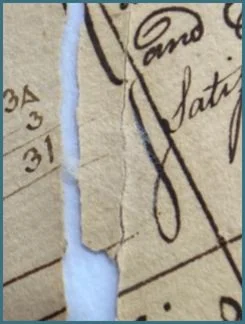
Micro mends to stabilize from further damage.
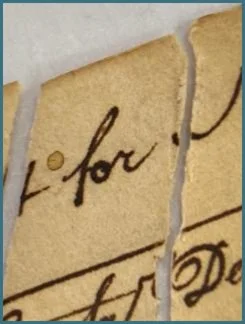
Detail of a paper break.
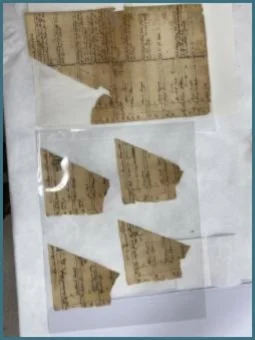
Broken sections organized and encased in Mylar to reintegrate later.
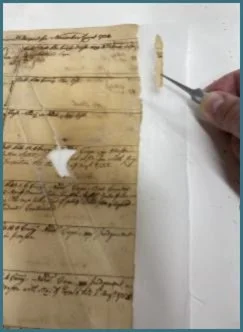
Densely written text with names and information at risk of becoming lost now being recovered. Even this small fragment carried more text than expected. Note also the great bleed-through of Iron Gall ink where this paper received water damage.
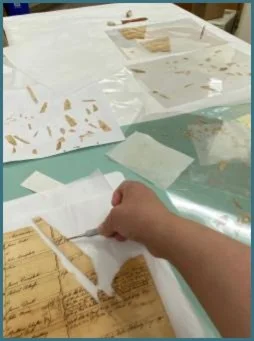
Reunification of paper fragments. Each fragment placed progressively increased the chance of positively placing the others.
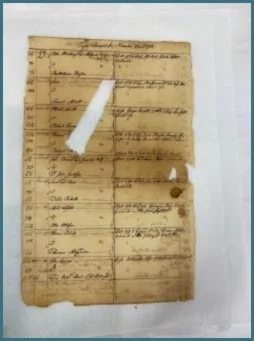
Page that was mended without compensating loss. Hopefully, the missing fragments will be found and later replaced.
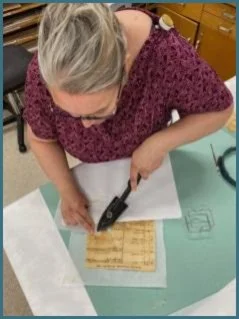
Using bespoke in-house heat set tissue (HST) to stabilize the page.
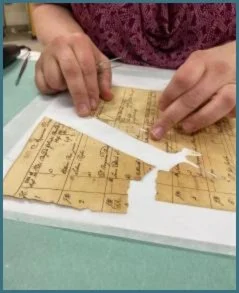
Fragment placement.
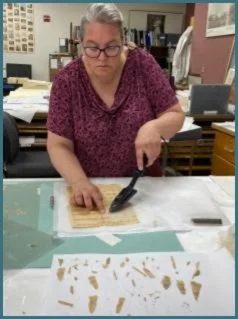
Heat set mends of small fragments with dense writing.
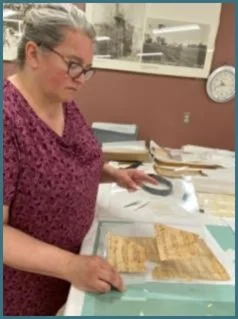
Comparing fragments in Mylar sleeves to puzzle pieces back where they belong.
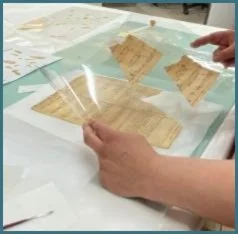
Comparing fragments in Mylar sleeves to puzzle pieces back where they belong.
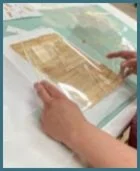
Identifying the missing corner (in Mylar sleeve) of the page.
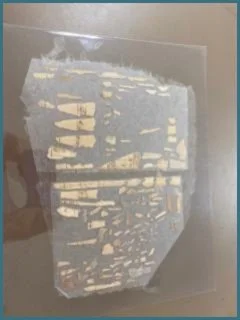
The correct placement of some fragments could not be identified. Those were held between two layers of HST to keep them in an alignment conducive to the eventual placement being found.. This is one of two fragment sheets.
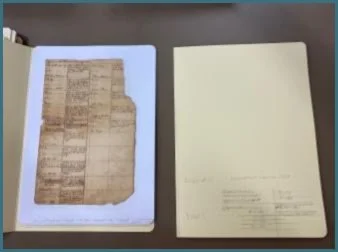
Foldering with information details. Bond paper subfolder with pagination.
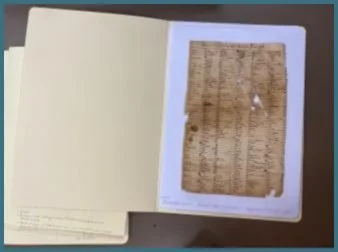
Roughly 1 in 6 sheets contain a high density of information. Here, a page with highly dense information is shown as it is foldered with information details.
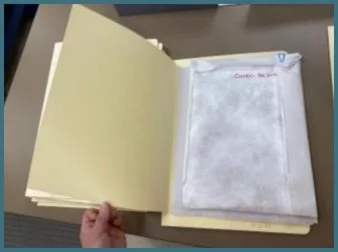
Original covers wrapped in Tyvek. The original covers were then foldered and clamshell-boxed for long-term storage after scanning.
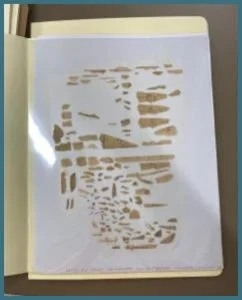
Foldered fragments are shown here ready for scanning and storage. The above image shows fragments placed in an arrangement that places the fragments oriented all the same direction based on available chain line and letter shape clues.
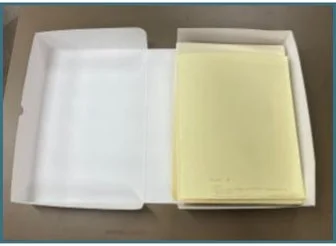
Folders containing the entire book, shown here inside a new clamshell box. Folders are marked with details about the range of pages within. If users must access the original object, this is the first view a user will see.